A husband and wife crossing the Daegwallyeong Pass encountered a starving tiger. Thinking quickly, the woman pulled down her trousers and crawled backward. The tiger fled in terror. The mouth of a beast, after all, ought to be slit horizontally and open vertically—yet here was a monstrous maw split vertically only to gape open sideways. Such is the tale told in
Animal mimicry is commonly understood not as a form of direct threat, but as a strategy of deception that compels predators to retreat. Yet once we look more closely at this mechanism of mutual deception, the relationship between predator and prey proves far more complex than it first appears. The food chain is sustained not by a one-sided logic of force, but by a network of strategic performances in which misrecognition and camouflage continually intersect. Consider the skin of a chameleon: an animal that survives by mimicry conceals itself by assimilating completely into its surroundings at every moment. Those surroundings, however, are never fixed, shifting constantly with the colors of branches and earth, with changes in weather and season. At the same time, predators adapt to the camouflage of their prey by refining their own sensory capacities, forcing the prey to devise ever new methods of concealment. Their relationship is thus continuously renewed—a dynamic ecology in which each encounter demands fresh acts of misrecognition and fresh strategies of disguise.
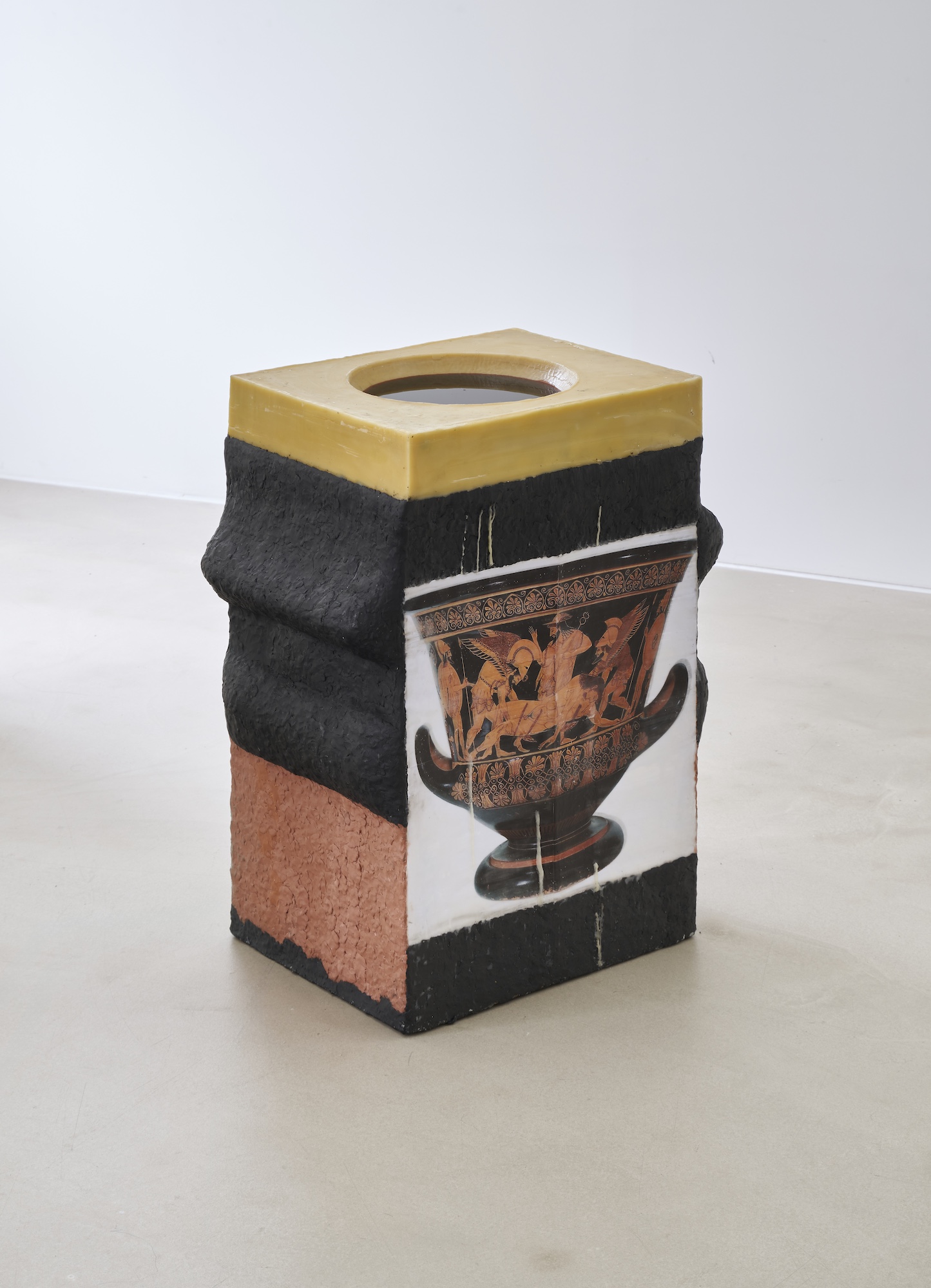
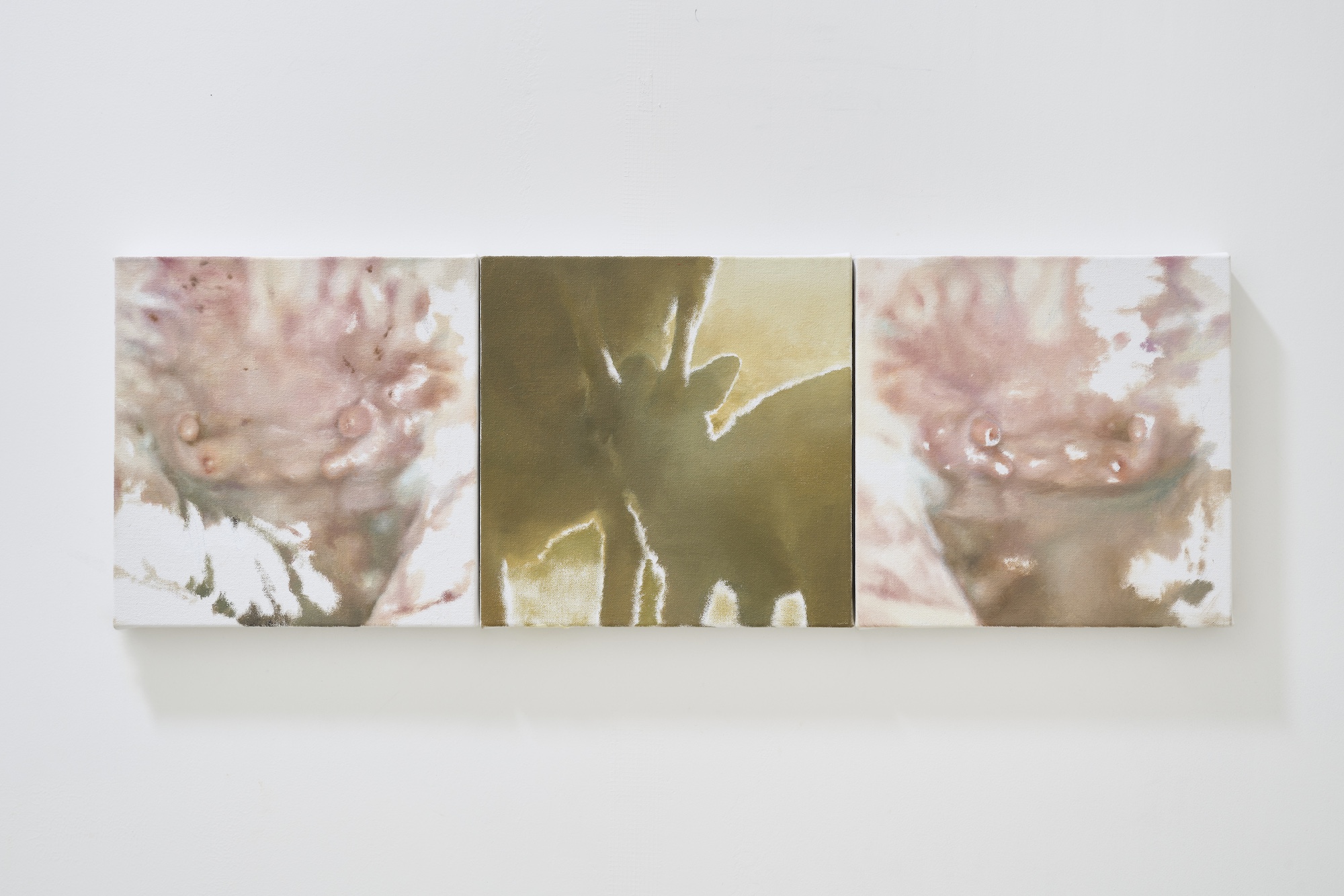
With the image of the tiger fleeing in panic and the woman deceiving it through her own bodily performance in mind, we turn to kinks, the two-person exhibition by Jo Hyunjin and Choi Ean. Each work disguises itself in hazy silhouettes, ceaselessly slipping away from the materialities and iconographies pressing against it. Like the Arctic fox, which molts with the seasons to blend into its surroundings—concealing itself from predators even as that same camouflage enables it to hunt seabirds and geese—the works in this exhibition likewise consume one another through their acts of disguise. Predator and prey take refuge within Jo Hyunjin's installations while lingering over Choi Ean's figures. The kangaroo wandering at the tip of Choi's brush, together with Dream Sunbathing, dismantled from Spectrosynthesis Seoul and carried into this space, begins its search for a new habitat.
Yet what remains of these relationships are the shadows cast by light, and within those shadows emerge specters of representation. The remains left behind after one has devoured the other—the unsettling afterimages and residual traces—reveal not only the affinities shared between the two artists' practices but also the irreducible distance that separates them. From the surplus produced where the works of Choi Ean and Jo Hyunjin repeatedly interlock, there emerges the forewarning of a disruptive species: kink—a mutant form that consumes in excess. This brings us back to the initial question. What was it that terrified the tiger so completely?
The fear the tiger experienced before the woman's sex arose from encountering a "hole" that the symbolic order founded upon its own horizontally split mouth could no longer contain. It was a hole the tiger itself had opened, yet one into which it could never bear to look—a chasm within itself. A terrifying aperture of thought, chilling enough to strike even the tiger with dread. Standing before that gap, which no seamlessly camouflaged order can ever fully seal, how do we respond, and to what extent are we ourselves unsettled?
Rather than rushing to settle these questions with definitive answers, the works of Jo Hyunjin and Choi Ean suspend the very possibility of closure. Instead, they fracture the ecology of normative order and summon before us kink—a disruptive species bearing the faces of anxiety and desire.
대관령 고개를 넘어가던 부부가 굶주린 호랑이를 마주쳤다. 여자는 기지를 발휘해 아랫도리를 훌렁 벗고 거꾸로 엉금엉금 기어갔다. 호랑이가 도망친다. 짐승의 입은 마땅히 가로로 찢어져 세로로 벌어져야 할 일인데, 이 괴물의 아가리는 세로로 찢어져서는 가로로 활짝 벌리는 것이 아닌가. 강릉시 옥계면의 「호랑이보다 무서운 짐승」* 설화 속 세로로 갈라진 여자의 질을 보고 기겁하며 달아나는 호랑이 이야기이다. 저 맹수는 도대체 무엇이 그리 두려워 헐레벌떡 도망갔을까.
동물들이 입는 의태는 그 자체로 위협적이라기보다 포식자를 ‘속여서’ 도망가게 하는 효과라고 익히 알려져 있다. 그런데 이 속고 속이는 메커니즘에 천착해본다면 포식자와 피식자의 관계는 생각보다 그리 간단하지 않다. 먹고 먹히는 먹이사슬은 일방적인 힘의 논리가 아니라 오인과 위장이 교차하는 전략적인 수행의 연결망 안에서만 가능해지기 때문이다. 카멜레온의 피부를 떠올려보면 알 수 있듯이 의태를 입는 동물들은 전적으로 매순간 주변 환경에 동화된 형상으로 자신을 은폐한다. 환경은 나뭇가지와 대지의 색깔, 그 날의 기후에 따라 천차만별로 변화한다. 뿐만 아니라, 피식자의 의태에 적응한 포식자는 감각을 더욱 정교하게 발달시키기 때문에 피식자는 매번 새로운 방식의 위장법을 모색해야 한다. 그렇게 양자의 관계는 지속적으로 갱신되는, 새롭게 오인하고 새롭게 위장하는 관계로 재배치된다.
혼비백산하여 줄행랑치는 호랑이와 바지를 힘껏 내리고 호랑이를 속이는 여자의 의태를 떠올리며 조현진, 최이안의 2인전, 《kinks》를 톺아본다. 각 작업들은 흐릿한 실루엣으로 자신을 위장하면서 그 앞에 부대끼고 있는 또 다른 물성과 도상들로부터 부단히 달아난다. 한편, 계절에 따라 털갈이를 하며 주변 환경과 비슷한 색깔의 털을 유지함으로써 포식자들로부터 은폐되지만 동시에 그 위장을 통해 바다오리와 기러기를 잡아먹는 북극여우와 같이, 이들의 작업 또한 바로 그러한 위장을 통해 서로를 잡아먹는다. 포/피식자는 조현진의 설치에 은닉하고 최이안의 형상들을 탐닉한다. 최이안의 붓 끝에서 배회하는 캥거루와 《스펙트로신테시스 서울》의 대지로부터 해체되어 날아들어온 <꿈의 일광욕>은 새로운 거주를 탐색한다.
헌데 관계의 흔적은 조명의 그림자로 남고, 드리운 그림자는 유령처럼 출몰하는 표상을 남긴다. 잡아먹고 남은 유해와 불온한 잔상은 전시에서 발견되는 서로의 유사성과 더불어 각자의 간극을 드러낸다. 최이안과 조현진의 작업이 반복적으로 맞물리는 지점에서 생산된 유해의 잉여는, 이제 과도하게 포식하는 변태kink라는 교란종의 출현을 예고한다.
다시 최초의 질문으로 돌아가본다. 호랑이는 도대체 무엇이 그토록 공포스러웠을까. 호랑이가 여근에 느낀 공포는 자신이 맹신했던 가로로 찢어진 입의 상징 체계가 미처 감당하지 못하는 ‘구멍’을 조우하면서 발생했다. 그것은 스스로 파두었던, 그러나 결코 들여다봐서는 안 되었던 자기 안의 구멍. 호랑이의 간담까지 서늘해지는 섬뜩한 사유의 구멍. 이토록 매끄럽게 위장된 질서조차 차마 메우지 못한 그 구멍 앞에서 우리는 어떻게 반응하고 또 얼마나 흔들리고 있는가.
조현진, 최이안의 작업은 그 모든 질문에 대한 정답을 확정하기를 잠시 유보하고, 규범의 생태계에 균열을 내면서 불안과 욕망의 얼굴을 하고 있는 변태kink라는 교란종을 우리 앞에 호출한다(고동혁).
- 「호랑이보다 무서운 짐승」, [자료출처 : 박순심(여. 81), 강릉시 옥계면 1991.05.30]
· 본문 안 동물들의 위장술은 KBS <동물의왕국>: “[3시간 연속 보기] 최상위 포식자가 될 수 있었던 동물들의 진화 비밀은? - WONDERS OF ANIMALS”을 참조하였다. (https://youtu.be/r0ki27FRcPM?si=tZH7jccPLMdgh6Tn)